



























 Operational efficiency


Most operations teams have more delivery data than they can act on. Carrier performance reports. Tracking event logs. SLA dashboards. The data isn’t the problem. Knowing what to do with it is.
At The Delivery Conference 2026, sessions on AI, forecasting, and intelligent operations kept returning to the same uncomfortable truth: the delivery industry’s challenge has never been a lack of data. It’s been the failure to turn that data into intelligence—the kind that tells you what’s about to happen, not just what already has.
This article shares insights from expert-backed sessions on ecommerce delivery, AI, sustainability, logistics, and more at The Delivery Conference 2026. Watch all of the event sessions on-demand.
There’s a phrase that came up in the Delivery Intelligence session that landed well with the room. Nick Ciutario, CTO of Auctane, described a conversation with a retail customer who said they wished they could “stop fighting amongst ourselves with 12 competing spreadsheets about which one is right.”
It’s a situation most delivery leaders will recognise. The data is there. It’s the synthesis that’s missing.
Ciutario drew a clear line between the two. A report tells you that carrier A is late 12% of the time. Intelligence tells you to use carriers B, C, and D instead—and for which scenarios, and why. One describes the past. The other shapes the future.
“If you start after, you’re already too late.”
Nick Ciutario, CTO, Auctane
JJ Karambelas from OneStock echoed this in the same session. The shift from reactive to proactive isn’t a technology problem, he argued. It’s a mindset one. Teams that treat delivery as a downstream operational function will always be catching up. Teams that embed intelligence across the full journey—from inventory availability at checkout through to the last mile—can start to anticipate, not just respond.
The Predictive Shipping session opened with a frank assessment: the delivery industry is still, fundamentally, reactive.
Michael Anderson, Managing Consultant at Place-B Consultancy and a former senior figure at Royal Mail Group and Metapack, framed it simply:
“Service is our only product. If you’re late, you break trust.”
Michael Anderson, Managing Consultant, Place-B Consultancy
That applies whether the broken promise lands with a consumer, a shipper, or a carrier. And yet most operations teams are still organised to respond to failures rather than prevent them. An exception is raised. An investigation follows. A replacement is sent.
The cost of that loop—financial and reputational—compounds quietly. Customer service interactions for missed or uncertain deliveries run to several pounds per contact. WISMO enquiries alone can account for a third of all inbound support traffic. And as volume grows, so does the exposure.
The argument for predictive delivery intelligence isn’t abstract. It’s a direct response to a cost and experience problem that most retailers are already carrying.
The Unveiling the Future of Intelligent Delivery session gave the clearest view of what AI-driven prediction looks like when it moves from concept to product.
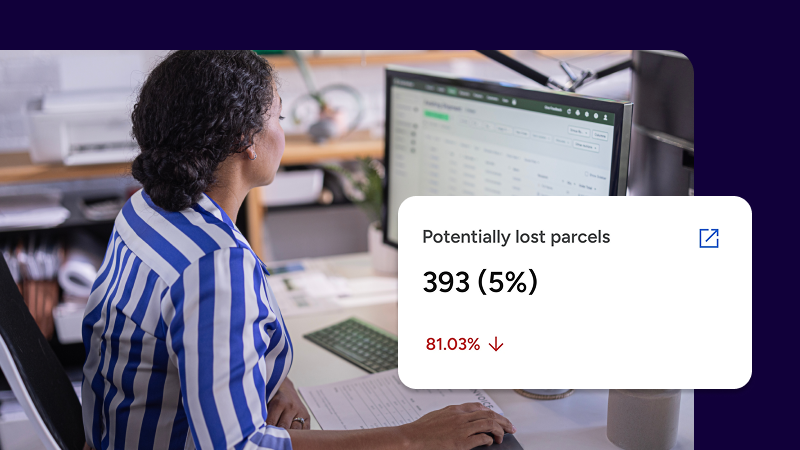
Emma Clarke, Senior Director of Product Management at Metapack, introduced Predict with AI—a capability built into Metapack’s Intelligence Hub that identifies parcels at risk of missing their expected delivery date, before that date arrives.
“Predict with AI identifies parcels at risk of missing the expected delivery date—before it’s due to happen.”
Emma Clarke, Senior Director of Product Management, Metapack
The confidence behind that claim comes from scale. Metapack processes approximately 15 billion tracking and operational events every year. That volume of live and historical data is what gives the model enough signal to make predictions worth acting on. Each prediction comes with a confidence score, so teams can calibrate how they use it—broader signals for internal monitoring, higher thresholds before triggering customer communications.
It’s a practical distinction. Prediction at lower confidence is still useful for triage. Higher-confidence scores are what you use before contacting a customer to flag that something may go wrong.
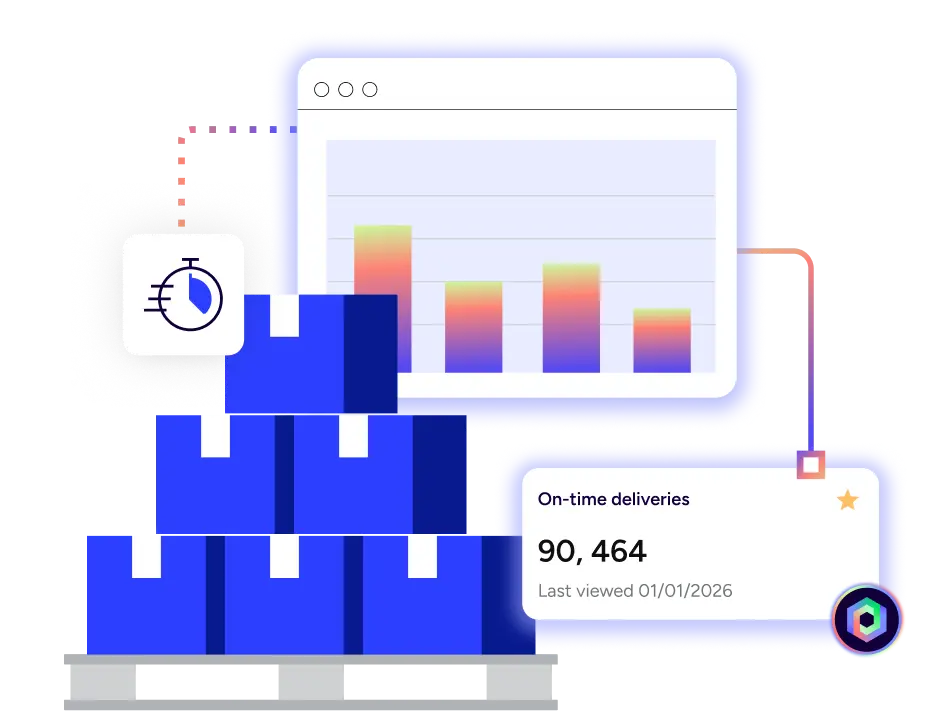
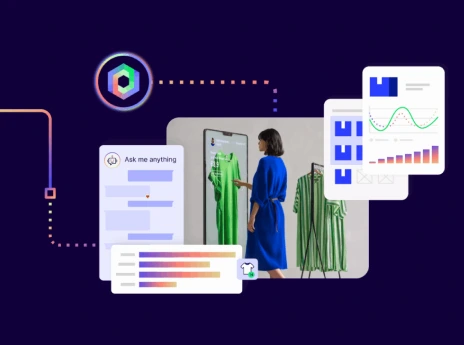
The broader Intelligence Hub also includes role-based dashboards that refresh every 15 minutes, giving CX, operations, and commercial teams a real-time view of what’s driving exceptions—tailored to what each team actually needs to act on. An embedded AI assistant, Ask Metapack, lets anyone search delivery data in plain language, without SQL queries or manual report-building. The goal, as Clarke put it, is to stop treating intelligence as a reporting function and start treating it as an operational one.
There’s a pattern in how the best-performing delivery operations are using these tools. They’re not waiting for perfect data, or for a single source of truth. They’re starting with the data they already have—which, in delivery, is already rich—and building feedback loops that improve over time.
As Ciutario put it: “If you’re not investing in it, you should be today.”
That’s not a vendor pitch. It’s a competitive observation. The gap between teams using predictive delivery intelligence now and those that aren’t is growing. And unlike some technology gaps, this one tends to compound—because the models improve the more data they consume, and teams that started earlier are further ahead each month.
Luke Sneddon from Satalia, who presented alongside Anderson in the Predictive Shipping session, made the same point from a different angle. Machine learning in logistics isn’t new, he noted. What’s new is the accessibility. Capabilities that required months of custom work not long ago are increasingly available as platform features—which means the barrier to entry is lower, but so is the excuse for not starting.
Reactive delivery management isn’t going away. Networks fail. Carriers have difficult periods. Exceptions will always need human judgment.
But the direction of travel is clear. The operations teams best placed in three years are the ones building the intelligence layer now—the layer that sits between data and decision, tells you what’s likely to happen next, and gets you in front of problems before your customers feel them.
Predictive delivery intelligence is already moving from competitive advantage to competitive baseline. The question, as several TDC 2026 speakers put it, isn’t whether to invest. It’s whether you can afford to wait.
Explore Metapack’s Intelligence capabilities.