


























 Operational efficiency


Ecommerce growth no longer breaks at demand—it breaks at fulfilment.
Orders come from everywhere: marketplaces, storefronts, social media, physical locations, and other channels. Customers expect speed, choice, and clarity as standard. Behind the scenes, operations are under growing pressure to keep up, which has forced a shift. Fulfilment is no longer a downstream function. It is the system everything else depends on—and that system has to be flexible.
Delivery today is not a straight line. It is a network that needs to adapt in real time, absorb disruption, and still deliver a consistent experience.
What’s changed is not just scale, but sensitivity. Small inefficiencies that once went unnoticed now compound quickly. A delayed dispatch, a missed carrier cutoff, or an inaccurate delivery promise can ripple across the entire experience. In a high-volume environment, these are not isolated issues—they become patterns.
This article shares insights from expert-backed sessions on ecommerce delivery, AI, sustainability, logistics, and more at The Delivery Conference 2026. Watch all of the event sessions on-demand.
Fulfilment was once relatively simple. Orders came in, were processed in one place, and shipped out through a small set of carriers. That model worked when scale was limited and expectations were lower, but it does not hold up in today’s environment.
Now, orders move through distributed systems. Inventory is spread across multiple locations, and fulfilment can happen from warehouses, stores, suppliers, or partners. This transition is being driven largely by customer expectations.
“The customer is really what’s driving the push toward this diversified fulfilment,” said Tom Wakefield, Group Head of Fulfilment at Kingfisher PLC, in the Flexible Fulfilment Advantage session.
“The customer is really what’s driving the push toward this diversified fulfilment.”
Tom Wakefield, Group Head of Fulfilment at Kingfisher PLC
The result is a more complex system where each order requires multiple decisions—where to fulfil, how to ship, and which service level to use. In many cases, this complexity scales quickly, requiring coordination across dozens—or even thousands—of routing scenarios.
What used to be a physical problem—moving goods—is now a decision problem. And that distinction matters, because decision quality now directly impacts delivery performance.
Flexibility has moved from a competitive advantage to a baseline requirement. The ability to fulfil orders from multiple nodes—whether through drop ship, ship-from-store, or third-party partners—gives businesses the ability to adapt to demand, respond to disruptions, and scale without overloading a single part of the system.
However, flexibility introduces its own challenges. Expanding fulfilment options increases operational complexity, particularly when it comes to maintaining consistency across delivery, tracking, and returns.
“These models bring significant opportunity, but also quite a lot of critical challenges,” said Wakefield.
At the same time, the pace of change continues to accelerate. New channels and marketplaces are constantly emerging.
“Online marketplaces now exist that didn’t exist even two years ago,” said Wayne Chapman, UK CEO of BNode’s international 3PL business, in the Warehouse Automation session. “It’s forcing fulfilment strategies to continuously evolve.”
“Online marketplaces now exist that didn’t exist even two years ago. It’s forcing fulfilment strategies to continuously evolve.”
Wayne Chapman, UK CEO of BNode’s international 3PL business
This creates a moving target. The network is not just complex—it is constantly changing. Flexibility, in that sense, is not just about having options. It is about maintaining control as those options expand.
A distributed network without structure quickly becomes unstable. Orders get routed inconsistently, delivery times vary, and the customer experience becomes unpredictable. This is why modern fulfilment is increasingly allocation-driven—introducing logic into how orders move through the network.
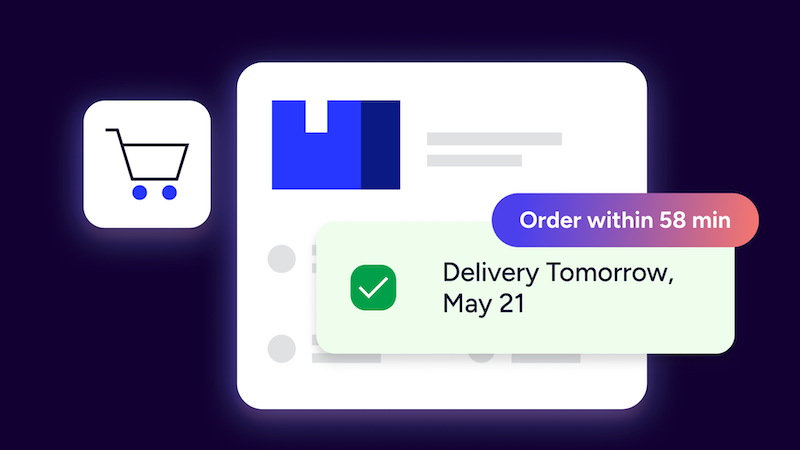
These decisions must happen early, often before the order is even placed. Fulfilment is no longer just a warehouse activity—it begins at checkout, where delivery expectations are set.
Customers today expect transparency, control, and accuracy.
This is also where expectations and operations can easily fall out of sync. If checkout presents options that the network cannot reliably support, the issue is not just operational—it becomes a customer experience failure.
Metapack’s Delivery Options use real-time data to determine what should be shown at checkout. It evaluates fulfilment locations, carrier availability, transit times, and cutoffs before presenting delivery choices. This ensures that what is promised is actually achievable. Metapack’s Delivery Manager then executes those decisions, applying allocation logic consistently across the network. Together, they create a closed loop between promise and execution.
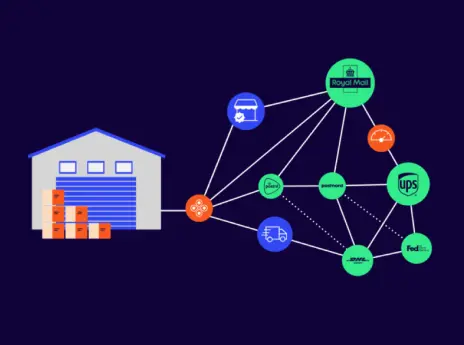
That connection is what turns fulfilment into a system rather than a sequence. Metapack’s single system combines carriers, warehouses, and operational layers that must work together seamlessly, which enables dynamic decision-making.
This orchestration becomes even more critical as complexity increases. Even advanced systems can fail if they are not properly integrated.
“If you don’t have those two items talking to each other, it can actually cost you significantly,” said Chapman.
What emerges is a more adaptive network. Decisions are no longer fixed—they evolve based on performance data, demand patterns, and operational constraints. Over time, this creates a system that improves with use.
While orchestration happens at the network level, execution still depends on the warehouse. This is where many operations begin to feel strain as complexity increases.
Automation plays a key role in addressing this. It improves speed, reduces errors, and enables operations to scale efficiently. However, automation must be applied with a clear purpose.
“Proven technology with proven ROI is what to go after, rather than innovation for its own sake,” said Chapman.
“Proven technology with proven ROI is what to go after, rather than innovation for its own sake.”
Wayne Chapman, UK CEO of BNode’s international 3PL business
Even small efficiency gains can have a meaningful impact. Automation that saves seconds per order may seem minor, but at scale, those gains compound into significant operational improvements.
The more important point is alignment. Warehouse efficiency only matters if it supports network-level outcomes—faster delivery, fewer errors, and more reliable execution.
Delivery extends beyond fulfilment into the carrier network, which has become more diverse and dynamic. Businesses now rely on a mix of national, regional, and specialised carriers, each offering different trade-offs in cost, speed, and coverage.
The challenge is not selecting a single carrier—it is selecting the right one for each order.
Customer expectations reinforce this need. Shoppers want flexibility, visibility, and choice, and they are quick to abandon purchases when those expectations are not met.
At the same time, delivery performance directly impacts retention. A poor delivery experience can have lasting consequences.
This shifts carrier selection from a cost decision to an experience decision.
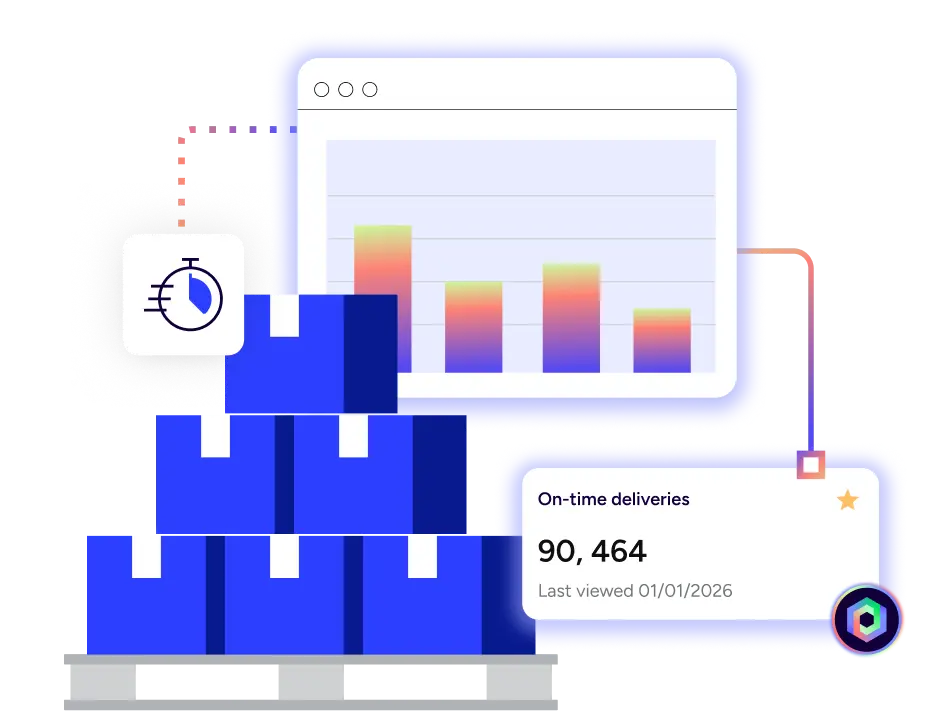
As networks become more complex, visibility becomes the foundation that holds everything together. Without it, coordination breaks down, issues go unnoticed, and teams are forced to make reactive decisions.
The challenge is not a lack of data, but fragmentation. Delivery data is often spread across systems, tools, and teams. This fragmentation slows decision-making and leads to missed opportunities.
At the same time, customers expect consistency. They do not see the network’s complexity—they see the outcome.
“The customers don’t really care about fulfilment. They just want the same experience every time,” said Wakefield.
“The customers don’t really care about fulfilment. They just want the same experience every time.”
Tom Wakefield, Group Head of Fulfilment at Kingfisher PLC
This creates a structural challenge. The network becomes more flexible, but the experience must remain stable. Visibility is what makes that possible—it connects decisions across the system and ensures alignment between teams.
Growth increases pressure across the entire fulfilment system. More orders, more nodes, and more decisions create more opportunities for failure.
Flexible fulfilment and smarter networks absorb that pressure. They allow businesses to scale without proportional increases in operational effort, making complexity manageable rather than overwhelming.
This is where infrastructure thinking becomes critical. Growth is not just about volume—it is about whether the system can handle that volume without degrading performance.
Fulfilment is becoming more connected, more dynamic, and more central to the business. It is no longer a sequence of steps, but a system that spans inventory, operations, carriers, and customer experience.
What comes next is a deeper integration of intelligence into that system. Decisions will become more predictive, not just reactive. Networks will identify risks before they impact delivery. Allocation will adjust automatically based on performance signals.
In many ways, fulfilment is moving toward a model where the system anticipates issues rather than responds to them.
It is easy to think about fulfilment as something you optimise over time, but the reality is more structural.
Fulfilment is infrastructure, and infrastructure shapes everything built on top of it. When it is flexible, businesses can adapt. When it is coordinated, they can scale. When it is connected, they can deliver consistently.
That is what defines modern delivery—not just moving orders, but building networks that make better decisions from the moment a customer clicks “buy” to the moment the order arrives.
Schedule a demo of Metapack to see how smarter delivery orchestration can improve performance across your entire fulfilment network.