



























 Operational efficiency


Every delivery operation has a moment of truth—the point where a parcel goes from “on track” to “problem.” For most retailers, that moment arrives far too late. A customer calls to check order status, a support agent scrambles to find answers across multiple carrier portals, a refund is issued, and the customer becomes frustrated. And the whole cycle starts again the next day.
This is the reality of reactive delivery management, and it’s costing enterprise retailers far more than most realise.
The costs aren’t hidden because they’re small. They’re hidden because they’re spread across so many teams and line items that no single person sees the full picture. Support overhead here, SLA penalties there, a loyalty programme discount to make up for a late delivery somewhere else. Add it all up, and you’re looking at a significant drag on profitability that compounds with every parcel you ship.
But here’s the thing: the vast majority of delivery failures don’t come out of nowhere. The data and signals exist, but most operations aren’t set up to act on them before it impacts the customer.
That’s where delivery failure prediction comes in—AI delivery intelligence that identifies at-risk parcels before they become customer problems. It’s a fundamental shift in how delivery operations work.
Let’s break down the actual costs of reactive delivery management. The expense is almost always bigger than you’d expect.
Start with the most common inbound post-purchase customer service enquiry: WISMO (“where is my order?”). Each one costs money to handle, whether that’s agent time, technology infrastructure, or the opportunity cost of a support team that could be doing something more valuable.
But WISMO is just one of the most visible costs. Beneath the surface, reactive delivery management creates a cascade of downstream costs that rarely show up in a single report:
And then there’s the operational cost. Without the tools to reduce delivery exceptions before they escalate, your operations team spends more time reacting to problems after the fact. That leaves little time for the strategic improvements that would prevent those problems in the first place.
For enterprise retailers operating at scale across multiple carriers and geographies, these costs add up to hundreds of thousands—sometimes millions—annually.
If the costs are this clear, why do so many retailers still operate reactively? It’s not because they haven’t noticed the problem. It’s because they lack the capabilities.
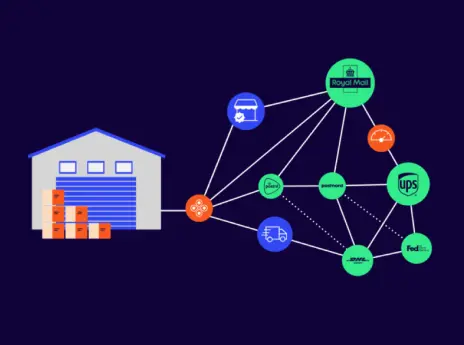
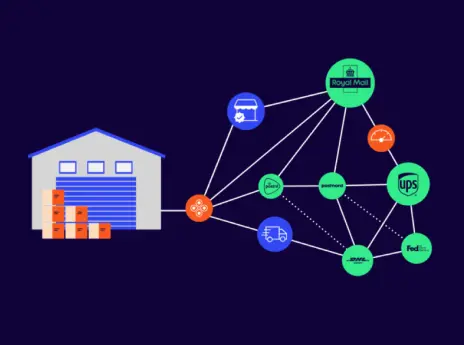
The first issue is fragmented carrier data. Many retailers work with multiple carriers across different regions and service types. At scale, that complexity is staggering. Some enterprise retailers manage relationships across hundreds of carriers and thousands of individual services spanning multiple geographies. Most teams don’t have the resources or technology to get a unified, real-time view of parcel status across all the carriers.
The second problem is the inability to predict delivery failure. Traditional delivery management platforms are built to report on what has happened, not what is going to happen. They can tell you that a parcel was delivered late yesterday, but they can’t tell you which parcels are likely to miss their delivery window tomorrow. Without that predictive layer, operations teams are always one step behind.
The third challenge is organisational. Most delivery operations teams are structured and incentivized to respond to issues rather than prevent them. The tools, the processes, and the KPIs are all built around reaction speed rather than prevention. Shifting to a proactive model requires not just new technology, but a new way of thinking about the purpose of the delivery operations function.
None of this means that reactive management is the right approach—only that it’s the default one. And defaults are powerful precisely because they don’t require a conscious decision to maintain.
So what does proactive delivery management actually look like in practice? It starts with prediction.
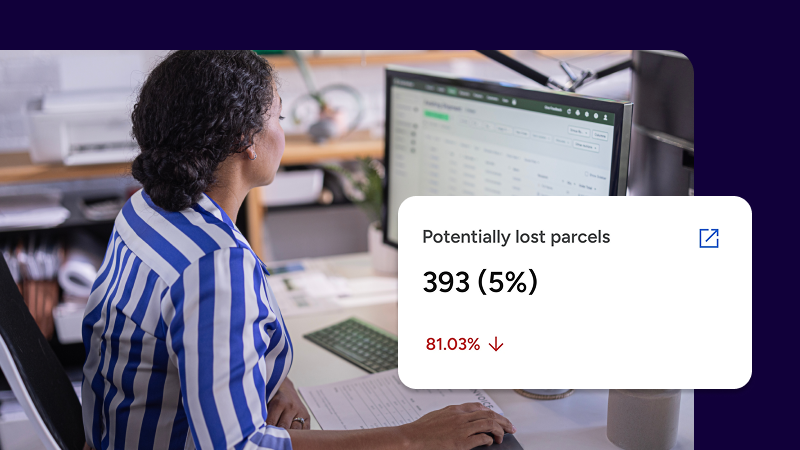
AI models trained on historical parcel events—millions of carrier scans, delivery outcomes, transit patterns, and exception data—can identify parcels at risk of delay or failure while they’re still in transit. Not after the customer has noticed or the support ticket has been filed, but while there’s still time to address it.
It’s an actionable, parcel-level prediction that tells your team which specific shipment is likely to experience a delay and assigns a confidence level behind that assessment.
That prediction enables your team to reach out proactively with an updated delivery estimate instead of waiting for a customer to call. Instead of issuing a refund after the fact, you can offer a discount code or expedited reshipment before the customer even realises there’s a problem. Instead of discovering a carrier performance issue at the end of the month in an SLA review, you can spot the pattern within hours and escalate it immediately.
The shift is significant. Teams move from spending their day triaging inbound complaints to spending it on targeted interventions that reduce delivery exceptions and prevent customer dissatisfaction. The same number of people, doing fundamentally more valuable work.
And the transparency matters too. When AI models drive operational decisions, retailers need to understand how those predictions are generated. That’s why having visibility into model confidence, data inputs, and prediction logic is so impactful. It’s not enough to be told that a parcel is at risk. When you understand why, you can calibrate your response appropriately and build genuine trust in the system over time.
Prediction is the foundation, but it’s most powerful when it’s paired with the right visibility layer that gives every team the specific view they need to act on those predictions.
A customer service team needs to see which customers are about to be affected, which contacts are likely to be incoming, and which proactive communications have already been triggered. The transport and logistics team needs to see carrier-level performance patterns, emerging exception trends, and whether a specific route or service is underperforming.
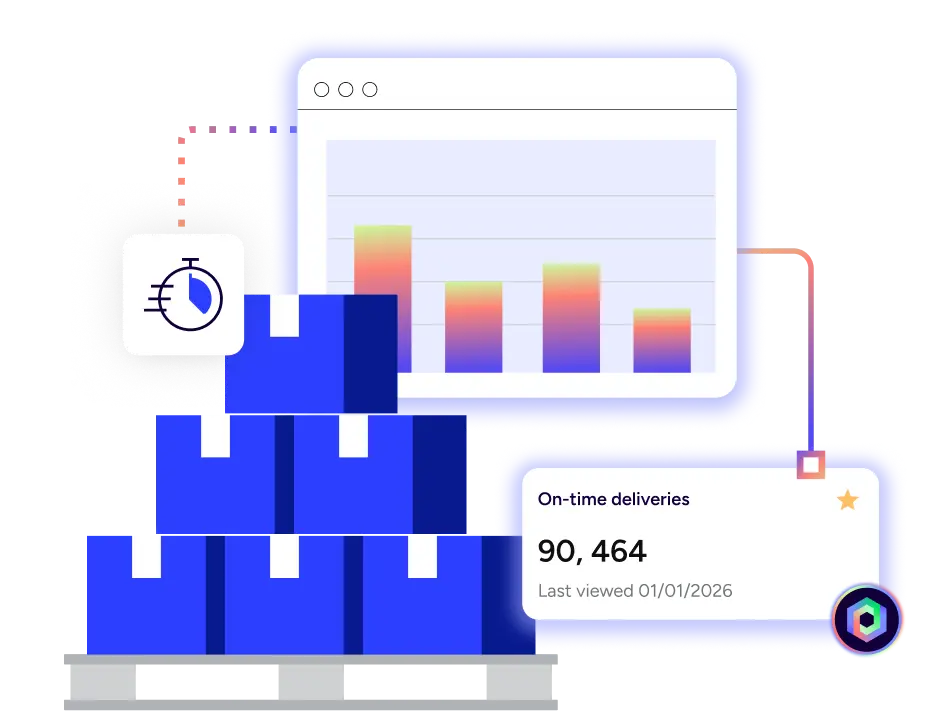
Role-based dashboards solve this by surfacing the metrics that matter most to each function’s daily decisions. Instead of one generic operations view that tries to serve everyone (and ends up serving no one well), each team gets a tailored perspective on delivery performance that maps directly to their responsibilities and KPIs.
And then there’s the question of accessibility. The best AI delivery intelligence in the world is useless if only one analyst on the team knows how to extract it. Natural language querying—the ability to ask a plain-English question and get an instant, data-backed answer—changes the equation entirely. When a head of customer service can type “show me all parcels due today that are flagged as at risk” and get an quick, accurate response, the barrier between data and decision disappears.
This combination of AI prediction, role-specific dashboards, and natural language access creates something genuinely new: a delivery intelligence layer that’s proactive, accessible, and actionable across every team that touches the post-purchase experience.
The financial case for moving from reactive to proactive delivery management is compelling, and it’s measurable across multiple dimensions.
The most immediate impact is a reduction in WISMO. By identifying at-risk parcels before the customer notices and reaching out proactively, a significant portion of those inbound contacts simply never happen. Metapack customers have seen up to a 40% reduction in WISMO queries through proactive tracking and communication, freeing customer support teams to focus on higher-value interactions.
Then there’s the SLA performance improvement. When you can see carrier issues emerging in real time rather than discovering them weeks later in a monthly review, you can escalate faster, reroute where possible, and hold carriers accountable with data. The result is better delivery performance and the cost savings that come with it.
The loyalty impact is arguably the most important. Customers who receive a proactive “your order is running slightly behind, here’s what we’re doing about it” message have a fundamentally different experience than those who discover a delay on their own and have to chase it down. The first scenario builds trust. The second erodes it. Over time, that difference shows up in repeat purchase rates, customer lifetime value, and the organic word of mouth that no amount of marketing spend can replicate.
And there’s an operational efficiency gain that’s easy to overlook. When your delivery operations team isn’t spending its entire day reacting to yesterday’s problems, it can work on optimising carrier allocation, improving delivery promise accuracy, reducing costs, and other opportunities.
The shift from reactive to proactive doesn’t just solve the immediate problem. It unlocks capacity for continuous improvement.
The transition starts with a single question: what would change if you could see delivery problems coming before your customers did?
For most retailers, the answer lies in lower support costs, greater carrier accountability, and happier customers. The technology to make proactive delivery management a reality—AI delivery intelligence, role-based dashboards, natural language querying—exists today. The question isn’t whether it’s possible. It’s whether you can afford to keep operating without it.
The retailers who are already making this shift aren’t doing it because they have bigger teams or bigger budgets. They’re doing it because they’ve recognised that the cost of inaction is simply too high to ignore.
Ready to see how AI prediction can transform your delivery operations? Book a personalised demo and find out what proactive delivery management looks like for your business.