





















 Customer experience


There’s a number that keeps coming up in conversations about checkout abandonment. Around 84% of shoppers who encounter a delivery option they don’t want—or don’t trust—will leave without buying. Joe Matheron, Head of Metapack at ShipStation Global, thinks that figure might even be conservative.
“84% may be a little on the low side,” he said at this year’s TDC. “If they can’t get it when they want, in the way that they want, they’re gone.”
That’s the tension at the heart of modern delivery. Retailers have invested heavily in expanding their carrier networks, their PUDO footprints, and their speed tiers. But too often, shoppers arrive at checkout and find a list of options that doesn’t match what they actually need—or worse, a promise that sounds good but can’t be backed up. The result is the same either way: abandonment.
What the best retailers are doing differently isn’t simply offering more. It’s offering the right things, with real-time confidence behind every choice.
This article draws on insights from expert-led sessions at The Delivery Conference 2025, including Options That Win, More Than a Parcel Locker, Beyond the Box, and The Experience Emphasis.Watch all sessions on-demand.
The instinct when improving delivery is to add options: more carriers, more time slots, more pickup points. But Chris Haighton, Retail Logistics Consultant at Haighton105 Consultants, pushed back on that framing at TDC. The options that work aren’t universal—they’re category-specific.
A DIY retailer and a fashion brand have almost nothing in common when it comes to delivery behaviour. One shopper is planning ahead, probably has a project underway, and needs the item on a specific day. The other is buying on impulse, wants the item quickly, and may return it. Offer both the same generic delivery menu and you’ve served neither well.
“You need to be thinking about what your customers actually need, not just what’s easiest to configure.”
Chris Haighton, Retail Logistics Consultant, Haighton105 Consultants
Graham Smith, Account Director at Gophr, made a similar point from a courier perspective. The goal isn’t to push a particular service—it’s to surface the right one for each shopper, in each context.
“What we’re all about is providing a choice, giving the customer the information they need, and letting them decide. Customers are surprisingly good at making the right call when you give them what they need to do so.”
Graham Smith, Account Director, Gophr
The implication is that curated options—fewer, better-matched, more confident—perform better than a sprawling menu. Retailers who’ve taken the time to understand what their customers actually need at checkout, and built their options around that, are seeing the results.
Ask most retailers what their customers want, and the answer tends to come back as “faster.” But the evidence from TDC pointed somewhere else: what shoppers want is certainty. They want to know exactly when something will arrive—and to trust that it will.
Graham Smith shared a telling example. Abercrombie & Fitch, when testing same-day delivery, found that shoppers weren’t choosing it primarily because they needed their order urgently. They were choosing it because same-day meant no ambiguity. The delivery would happen today. No three-day window, no waiting, no wondering.
“Same-day isn’t just about speed. It’s about certainty. Customers know it’s coming today, and that’s what they’re paying for.”
Graham Smith, Account Director, Gophr
That insight changes how you think about what to offer and how to present it. A next-day delivery promise is only as valuable as the confidence behind it. If the option can be displayed at checkout but not actually fulfilled on time—because stock location, carrier capacity, or cut-off times haven’t been properly accounted for—it damages trust rather than building it.
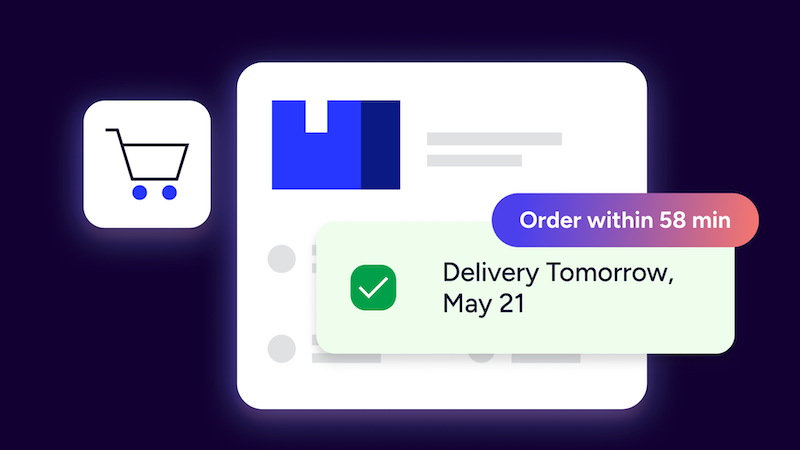
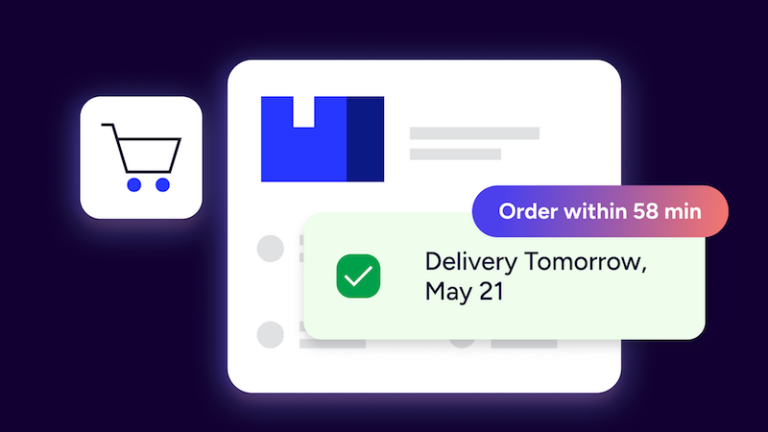
This is where the infrastructure behind the checkout experience matters enormously. Metapack’s Delivery Options capability surfaces real-time, validated choices based on live carrier data, stock location, and cut-off times—so every option shown at checkout is one that can actually be delivered. Countdown timers let shoppers see exactly how long they have to order for a given delivery slot, removing ambiguity and creating a clear, confident moment of commitment.
The growth of PUDO—pickup and drop-off—has been steady for years. But the data Lee Graham shared at TDC suggests something more structural is happening. Out-of-home delivery isn’t a niche preference for a particular type of shopper. For many people, it’s simply the better option.
Lee Graham, Director of Parcel Pending Locker Solutions at Parcel Pending by Quadient, presented figures that reframe how retailers should be thinking about locker and PUDO provision. The UK now has more than 20,000 locker locations. Nearly a quarter of all locker activity happens between 7PM and 7AM—the hours when people aren’t at home or at work, but when they’re out, running errands, picking up children, passing through transport hubs. That’s not a marginal use case. It’s a primary one.
“80% of locker users go on to make an in-store purchase after collecting. That’s not a delivery metric—it’s a retail metric.”
Lee Graham, Director of Parcel Pending Locker Solutions, Parcel Pending by Quadient
The commercial case extends to security. £666 million in parcels were stolen in the UK in 2024—a figure that sits behind a significant number of support tickets, redelivery costs, and eroded customer relationships. Lockers eliminate that risk entirely.
For retailers thinking about how to serve shoppers who work unpredictable hours, live in dense urban areas, or simply don’t want to wait at home for a delivery window, out-of-home has to be a first-class option—not an afterthought at the bottom of the checkout list. Metapack’s network spans more than 1.3 million PUDO points globally, with a 99% first-time delivery success rate that speaks directly to the certainty shoppers are looking for.
Post-purchase communication is often treated as a separate workstream from the checkout experience. But Sham Aziz, Founder of thecxway, made a point at TDC that reframes the whole picture.
“As soon as they hit checkout, that’s when the clock begins. That’s when the customer’s anxiety starts. They’ve given you their money. Now they want to know what happens next.”
Sham Aziz, Founder, thecxway
Brands that go silent after a purchase—or that over-engineer their communications—both get this wrong, but in different directions. Sham described watching brands “drop off a cliff” post-checkout: the journey up to purchase is carefully designed, tested, and optimised. Then nothing, until a tracking link arrives.
James White, Senior Director of Partnerships at Klaviyo, offered a useful analogy. He referenced Rory Sutherland’s classic observation about the London Underground: knowing when the next train is coming reduces the anxiety of waiting. The wait doesn’t feel shorter—but it feels manageable. Delivery works the same way. A shopper who knows their parcel is on the van, due between 2PM and 4PM, and will receive a notification when it’s ten minutes away, is a fundamentally different kind of customer to one staring at a confirmation email with no further information.
Clare Bailey, Founder of The Retail Champion, added an important qualifier: over-promising on timing is just as damaging as under-delivering.
“If you set an expectation and then beat it dramatically, you’ve also created a problem. The customer bought on the basis of the information you gave them. Consistency matters.”
Clare Bailey, Founder, The Retail Champion
The delivery experience—what shoppers see at checkout, what they’re told in confirmation messages, how updates are framed—needs to be consistent from the moment the order is placed to the moment the parcel arrives. That coherence is what builds trust, and trust is what drives repeat purchase.
One of the sharpest lines from TDC came from Sham Aziz, in response to a question about how much complexity retailers should be building into their delivery programmes.
boring, be deliberate, and be basic. Don’t try to be all things to all people. The brands that win at delivery aren’t the ones with the most options—they’re the ones who’ve mastered fewer options brilliantly.”
Sham Aziz, Founder, thecxway
There’s a version of the delivery options problem that’s actually a menu problem. Sixty options spread across carriers, time slots, and service levels doesn’t give shoppers more control—it creates decision fatigue and undermines confidence. The option that wins isn’t the fifth one on the list. It’s the one that’s been designed, tested, and refined to match what this particular customer, buying this particular category, actually needs.
Chris Haighton made a related observation: increasingly, customers are doing the personalisation themselves—they’re filtering, comparing, choosing—but only if the presentation makes it easy to do so.
That’s why where you surface delivery options matters as much as what you surface. Metapack enables retailers to display delivery choices at multiple touchpoints—product page, basket, checkout—so shoppers can factor in delivery before they’re committed. An item they wouldn’t have bought if they’d only seen delivery information at the final checkout stage becomes a conversion when they see on the product page that it can be with them by tomorrow.
The business case for getting delivery options right at checkout isn’t only about conversion—though the numbers there are significant. Metapack’s data shows a 24% increase in checkout conversions and a 5% improvement in customer retention for retailers using Delivery Options.
But the longer-term impact is arguably more important. Joe Matheron was direct about this:
“Don’t underestimate the repeat purchases and the loyalty that the right delivery experience will drive. This isn’t just about getting today’s order out the door.”
Joe Matheron, Head of Metapack
Tobias Buxhoidt, CEO of parcelLab, brought the same point to life from a post-purchase perspective.
“This is the moment where you either make or break a relationship with a customer. They’ve trusted you with their money. What happens next is what they remember. It’s where customers decide whether they will come back or not.”
Tobias Buxhoidt, CEO, parcelLab
The retailers winning on delivery aren’t thinking about it as a logistics function. They’re thinking about it as a relationship moment—a chance to set expectations, build confidence, and give customers a reason to return.
That starts at checkout. With the right options, backed by real-time data, displayed clearly and consistently across every touchpoint. Less complexity, more confidence. Less noise, more trust.
Explore how Metapack’s Delivery Options help retailers build real-time, validated checkout experiences that convert—and keep customers coming back.