



























 Customer experience


In the days after Christmas, Alan Mullen and his team at Superdry & Co faced a familiar enterprise scenario: 5,000 orders stuck at customs, shipped from their warehouse in Belgium. In any normal scenario, that’s the kind of situation that floods a service team’s inbox and sends NPS into freefall.
It didn’t. Mullen’s team manually identified the affected orders, pulled the tracking IDs, and worked with the email team to get a proactive update out to every customer with a clear timeline—before anyone had reason to wonder where their order was. The anticipated wave of contacts never materialised.
Mullen shared the story during the Smart Costing session atThe Delivery Conference 2026, and the lesson wasn’t subtle.
“Customers don’t expect things to be perfect, but they expect you to update them when things go wrong.”
Alan Mullen, Senior Customer Service and Business Change Manager, Superdry & Co
That’s the tension at the heart of enterprise delivery management. The problems are inevitable—customs delays, carrier disruption, demand spikes, and regional variance. What separates the brands that come out stronger from those that haemorrhage loyalty isn’t whether things go wrong. It’s whether the operation is built to respond.
At TDC 2026, practitioners from some of Europe’s largest retailers spent two days making the case that delivery is no longer a logistics problem. It’s a strategic one. And the gap between brands that have made that shift and those still treating fulfilment as a cost centre is widening.
This article shares insights from expert-backed sessions on ecommerce delivery, AI, sustainability, logistics, and more at The Delivery Conference 2026. Watch all of the event sessions on demand.
Kristian Tottmar, logistics network strategic lead at H&M, was direct about the organisational root of most delivery failures during the conference.
“Delivery fulfillment—it is not only a logistic question,” Tottmar said. “It needs to be anchored, strongly, to your brand and company strategy.”
That’s not a logistics upgrade. That’s a structural one. For enterprise retailers managing multiple markets, multiple carriers, and multiple fulfilment nodes, the single most common failure mode isn’t a bad service. It’s misalignment between what the business promises and what the operation can actually deliver.
The downstream cost of that misalignment is real. Matthias Krieger, co-founder of UK carrier HIVED, made the economics plain in Turning Delivery into a Revenue Stream. When retailers cut logistics spend without accounting for what it protects, they often churn the very customers they were trying to serve cheaply. The retention loss outweighs the cost saving.
“Delivery is a revenue opportunity, and it’s a value centre rather than a cost centre.”
Matthias Krieger, co-founder, HIVED
Chris Forbes, co-founder of Cheeky Panda, framed the same idea from a growth perspective in Delivery That Delivers.
“You’ve really got to focus on not having a leaky bucket,” he explained. “If you’re working really hard to get your customers, you’ve got to have retention—and retention is about delivery and customer experience.”
For enterprise brands, that bucket has many holes to plug.
Before a parcel is picked, before a label is printed, the customer has already formed an expectation. It happens at checkout, the moment they see their delivery options.
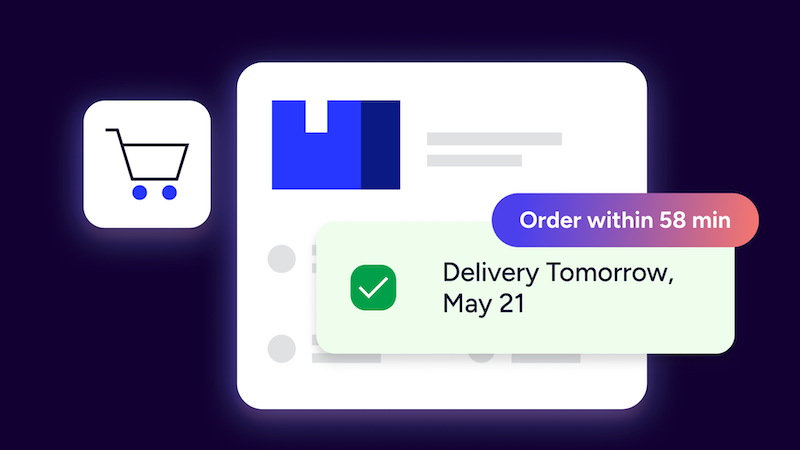
Vague promises—estimated windows, hedged dates, generic “3–5 working days”—create anxiety before the order even ships. Customers who aren’t confident their delivery will arrive when they need it either abandon the basket or contact service when it doesn’t. Both outcomes are expensive.
Surfacing accurate, real-time delivery options at checkout requires live data from carriers, warehouses, and fulfilment locations simultaneously. When that infrastructure isn’t connected, the promise made at checkout is often one the operation can’t keep. Static rules don’t know what your carriers or warehouses are actually doing. That’s a retention problem disguised as a conversion problem.
Getting checkout delivery right isn’t just about choice. It’s about certainty. Customers want to know, before they commit, that what they’re being told is actually going to happen. As Krieger put it: “People are really all about trust and certainty. They don’t necessarily mind if things aren’t as optimal as they could be—as long as they trust what you’re telling them is actually going to happen.”
Enterprise delivery complexity tends to accumulate gradually. A new market here, a new carrier there, a new warehouse added during peak. Each addition makes sense individually. Collectively, they create an operation that’s increasingly difficult to manage with static rules and manual intervention.
The moment the logistics operation stops being an enabler and starts being a constraint on growth is usually the moment someone in a leadership meeting asks why they can’t enter a new market faster, or why carrier performance is inconsistent across regions, or why the team keeps growing but throughput isn’t keeping pace.
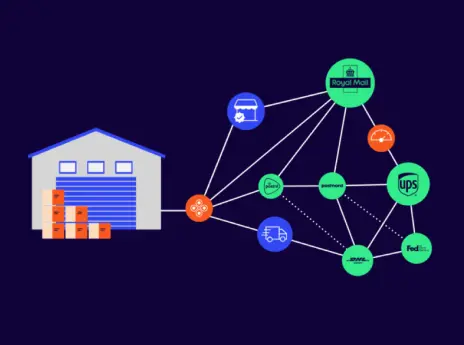
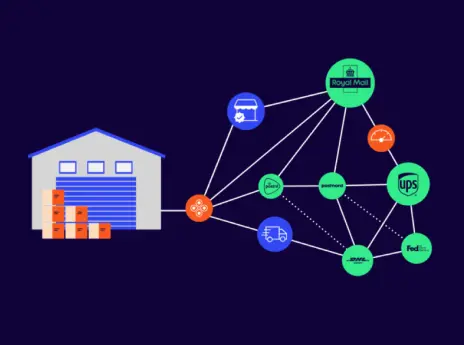
The answer is rarely a people problem. It’s an architecture problem. Dynamic, intelligent carrier allocation—selection based on real-time data from the consignment, the warehouse, and the carrier network—removes the single point of failure that manual rules create. When a carrier is experiencing disruption in a specific region, shipments reroute automatically. When volume spikes, throughput scales without requiring additional headcount to manage exceptions.
The same logic applies to market expansion. Entering a new geography used to mean months of integration work: new contracts, new API builds, new operational processes. At the pace modern enterprise retail moves, that timeline is a competitive disadvantage. The retailers at TDC expanding fastest have decoupled market entry from carrier integration—accessing new carrier services through a single connection, with new integrations committed in weeks.
Most enterprise retailers think of order tracking as a service function. It reduces WISMO contacts and keeps customers informed. That framing isn’t wrong—but it stops well short of what’s actually possible.
A tracking notification is one of the most-opened communications a brand ever sends. Engagement rates for delivery updates consistently outperform marketing email. And yet the default for many retailers is to hand that communication entirely to the carrier—surrendering the brand touchpoint, the traffic, and the data that comes with it.
Jade Roberts, general manager of customer experience at Monica Vinader, described during Make Delivery Your Advantage what it looks like when a brand takes that window seriously. Her team built a system that identifies parcels predicted to arrive late and triggers a proactive email before the customer has any indication there’s a problem. The delivery charge is automatically refunded. An updated arrival estimate is included. A personal concierge from customer care is assigned to see the order through.
“What we’re telling you at that point is your parcel’s going to be late,” Roberts said. “But we’re doing everything we can to make sure you don’t have to contact us.”
The result was higher NPS scores across every carrier tested with the system. Some customers responded to say thank you—for a delivery that was running behind.
“What we’re telling you at that point is your parcel’s going to be late. But we’re doing everything we can to make sure you don’t have to contact us.”
Jade Roberts, General Manager of Customer Experience, Monica Vinader
A branded tracking experience keeps the customer in the retailer’s environment—not the carrier’s—and turns what is typically dead space into an opportunity to build loyalty, surface relevant products, and drive return visits. The retailers measuring this properly aren’t doing it because it feels right. They’re doing it because the click-through rates and repeat purchase correlation make the investment case themselves.
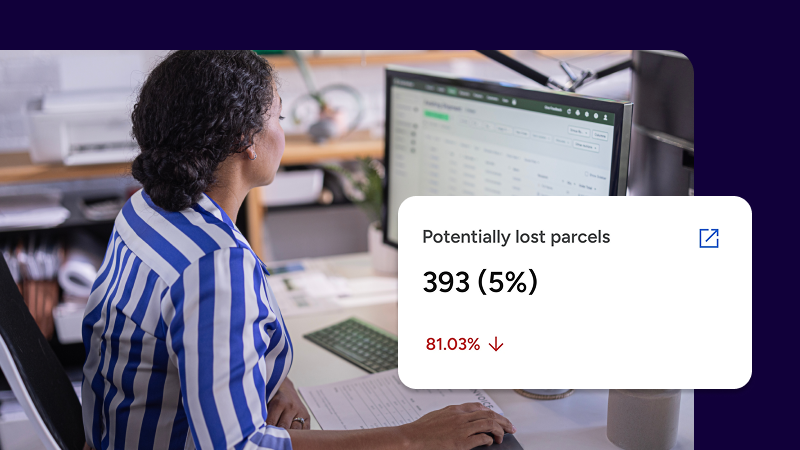
There’s a version of delivery performance management that is entirely reactive. A parcel goes missing. The customer contacts service, and the team investigates. At enterprise volume, the cost of that sequence—operational time, carrier charges, customer goodwill—compounds quickly.
The more sophisticated approach is to move the intervention point upstream. If a parcel is at risk before the customer knows it’s late, there’s still time to act: trigger a proactive communication, flag the issue for the service team, identify whether the problem is isolated or a broader carrier pattern. That last point matters particularly for enterprise retailers operating across markets—what looks like a one-off incident at the order level often turns out to be a systemic carrier issue at the regional level. Spotting it early changes the decision from reactive triage to proactive allocation adjustment.
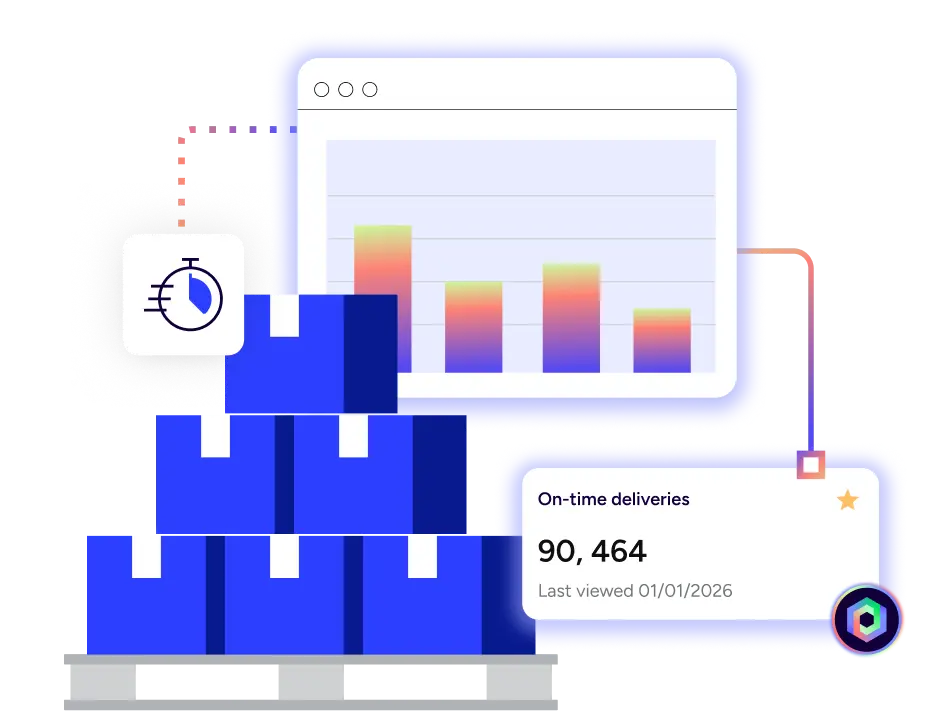
Regionalised delivery insight also feeds decisions that sit well beyond the logistics team. That data feeds decisions well beyond the logistics team: carrier negotiations, network design, CX investment. The brands at TDC using delivery data this way aren’t just optimising operations. They’re building a strategic asset.
Mullen closed his session at TDC 2026 with an observation that stuck.
“Within the next couple of years, people are going to have their own bots,” he said. “We’re going to have bots talking to our own AI—and the customer world is going to change as well.”
He’s describing a near future in which the delivery experience is evaluated by systems before a customer has made a single active choice—AI agents comparing shipping options, checking return policies, assessing reliability signals across retailers, and making recommendations on behalf of the people they serve. The brands that come out ahead in that environment aren’t the ones with the lowest costs or the most marketing spend. They’re the ones with a delivery operation that is measurably reliable, genuinely flexible, and consistently communicated.
That infrastructure is being built now. The question isn’t whether your customers care about delivery. They do. The question is whether your operation is positioned to make it count.
A quick gut check. You’re in good shape if…
Delivery is anchored to business strategy, not just logistics. Your operations, ecommerce, and customer experience teams are aligned on what a good delivery experience looks like—and what it costs when it goes wrong.
Your checkout promise reflects reality. The delivery options you show at checkout are backed by live carrier and warehouse data, not static rules. What customers see is what they get.
You’re not dependent on a single carrier. When a carrier underperforms in a region, you can reroute without operational disruption. Carrier flexibility is built in, not bolted on.
New markets don’t require months of integration work. You can enter a new geography—and access local carrier services—without rebuilding your logistics architecture each time.
The post-purchase window belongs to your brand. Your tracking communications look and feel like you, not a third-party carrier. Customers stay in your environment after the order ships.
You’re proactive when things go wrong. When a delivery is at risk, your customer hears from you before they have to ask. The service team isn’t the last line of defence.
Your delivery data is informing commercial decisions. Carrier performance insights, regional loss trends, SLA variance—these are feeding into carrier negotiations and fulfilment strategy, not just operational reports.
If most of those are yes, your operation is already ahead of where most enterprise retailers are. If a few gave you pause, that’s precisely where the opportunity is.
Metapack connects enterprise retailers to 350+ carriers and 4,000+ services through a single integration—with the automation, tracking, and intelligence tools to turn delivery into a genuine competitive advantage. Schedule a demo to see how it works for your operation.