




























 Customer experience


As your ecommerce business grows, complexity increases faster than volume. Processes that once worked begin to hold you back as you scale from shipping hundreds of parcels a day to thousands. Manual decisions introduce risk. Customer expectations rise. Costs get harder to control.
At enterprise levels, a seamless delivery experience is a survival skill, not a nice-to-have.
At the same time, shipping is now a more visible and influential part of the customer journey. If there are weaknesses in your delivery operation, they won’t stay hidden for long.
Here are six blind spots high-volume shippers commonly overlook—and the critical capabilities that close them.

Many high-volume retailers believe they’re automated. In practice, key decisions are still manual. That works—until it doesn’t. In enterprise environments, every small manual step slows you down, introduces inconsistency, and increases risk.
Teams waste time entering addresses, comparing carrier rates, printing labels, and deciding which service to use for each order. These repetitive tasks are not only inefficient but are error-prone. Manual data entry naturally leads to mistakes—wrong addresses, wrong services, or forgotten custom requirements—and those errors ripple outward, leading to increased costs and unhappy customers.
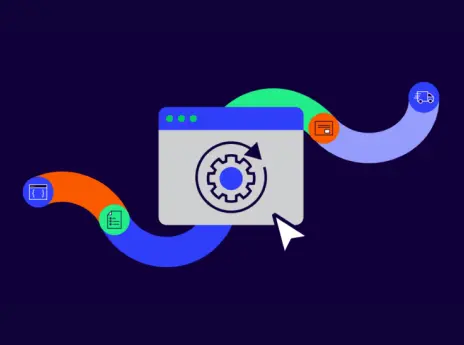
True automation brings structure to shipping operations. At the heart of this automation are shipping rules: instructions that tell your system how to route, label, and manage every parcel. Shipping rules take complex decision-making out of human hands and into software that runs at scale and applies your strategy consistently to every shipment.
With this transition from manual choice to automated logic, a shipping workflow becomes repeatable, reliable, and far more efficient than anything a team could sustain manually.
Automated carrier selection, driven by preset rules, brings critical advantages. Instead of relying on staff to select carriers, choose service levels, calculate costs, route orders, and update inventory, the system automatically applies your policy. That removes guesswork and enforces your shipping strategy without constant oversight.
Manual shipping also throttles growth. As order volumes rise, the labor required to keep up increases in step unless you automate. That means hiring more staff just to maintain basic throughput. In contrast, automation changes how businesses scale. Robust shipping rules absorb the growth.
Shipping rules also support strategic flexibility. When your business needs change—whether you adjust service levels, add carriers, or open new warehouses—automated rules can adapt to new priorities. Rather than reprogramming your entire workflow or retraining teams, you update the rules that govern decisions.
The bottom line: Automation creates operational infrastructure and shifts shipping from a reactive, ad-hoc activity to a predictable, measurable process. Companies that embrace shipping rules are more likely to meet delivery promises and scale without breaking their operations. Those who don’t risk inefficiency, error, and a slower path to growth.

The customer journey doesn’t end with a purchase. What happens after a customer buys can shape how they view your brand and whether they come back. Retailers need solutions that don’t just solve logistics problems, but also strengthen customer trust and loyalty.
After a customer places an order, they wait. But that waiting period is not a blank space. It’s a window of opportunity. If customers feel uncertain about the status of their order or have to jump to carrier sites with confusing interfaces, their confidence can drop. Branded delivery tracking changes that. Instead of directing them to an external service, it keeps them on your site and shows delivery status in a familiar, branded environment.
This continuity keeps the experience cohesive and reinforces your identity at every step.
Branded tracking also reduces customer support demands and costs by lowering “where is my order?” inquiries.
Keeping customers informed in real time and through proactive notifications gives them control and reduces anxiety about their purchase. When tracking pages align with the brand tone and design, every delivery update becomes another interaction that supports loyalty and opens the door to future sales.
This is not just convenience—it’s strategic engagement that keeps your brand top of mind between purchase and delivery.
A similar principle applies to a returns platform. A poor returns experience can undo the goodwill built during the sale and delivery stages. Slow response times, unclear policies, or forcing customers to navigate carrier sites can lead to frustration. Best-in-class returns software solves these issues with a self-service portal that automates return authorisation, lets customers initiate a return, choose how to return items, see expected timelines, and monitor progress just like they do with deliveries.
This self-service approach signals respect for the customer’s time and autonomy. They can manage their return on their own terms.
But there’s another strategic benefit: data. When returns are handled through a unified platform, you can see patterns—why items are returned, what carriers perform best, and where bottlenecks occur. That insight helps you refine product descriptions, sizing guidance, inventory decisions, and packaging that reduces return rates over time.
Returns software also protects margins. By automating return authorisation and offering carrier choices, you can cut service costs and streamline warehouse workflows. At the same time, customers don’t feel abandoned post-purchase. They see clear instructions, receive confirmations and notifications, and watch their refund or exchange process unfold from your branded portal.
The bottom line: Together, post-purchase capabilities reinforce the customer’s choice to buy from you. When tracking is easy, returns are seamless, and notifications keep them up to date, customers feel valued. The post-purchase period ceases to be a liability and becomes a driver of retention and long-term growth.

Enterprise retailers generate vast amounts of shipping data. But it usually remains untapped potential. Collecting data isn’t the hard part—it is interpretation.
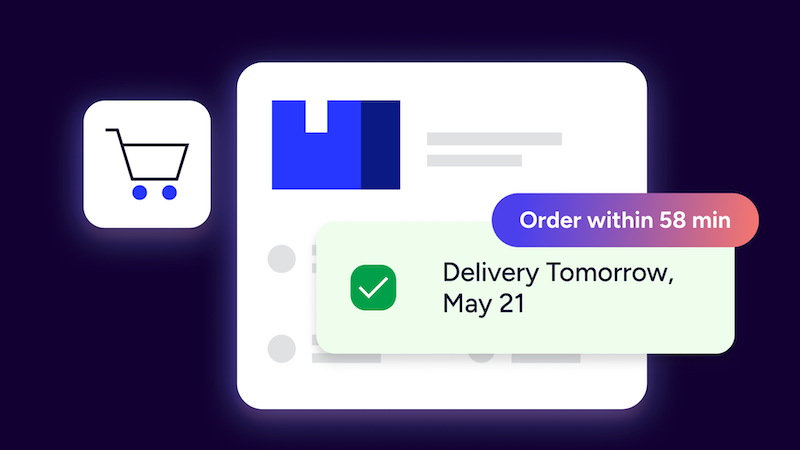
Many teams can see total volume and total spend. Fewer can see performance by carrier, service type, or warehouse. Even fewer can measure how actual delivery performance compares to the promise you made at checkout.
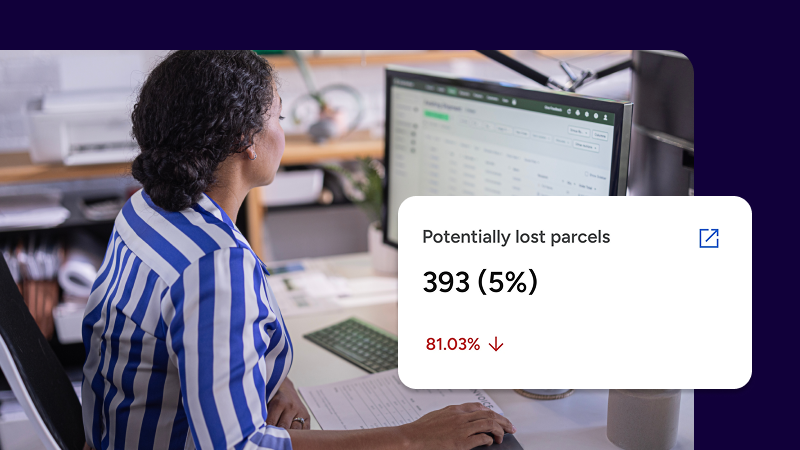
The right tool unlocks insights from data, enabling teams to work smarter and leaders to make important business decisions. But without a unified shipping analytics platform, it’s impossible to get a granular or complete view of your entire shipping operation and network.
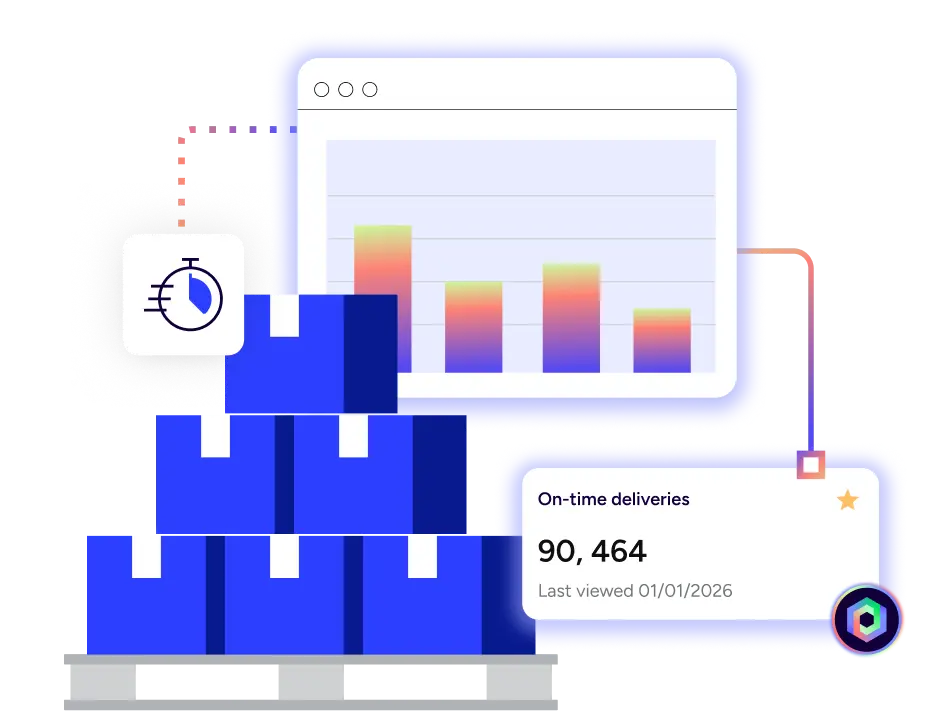
An intelligent reporting solution consolidates and standardises tracking events from hundreds of carriers and translates them into easy-to-understand statuses. Businesses can monitor performance across all carriers, services, regions, and warehouses in one place, rather than working across multiple platforms, manually stitching together reports, or building custom tools.
This visibility extends across the full journey, covering parcels in the warehouse, in transit, out for delivery, delivered, and returned.
Teams can identify shipments that are stuck before dispatch, parcels delayed in the carrier network, and orders at risk of missing their promised delivery date. Instead of reacting after a customer complains, operations teams can intervene early—rerouting, expediting, or proactively communicating.
Carrier reports support contract negotiations, service reviews, and allocation decisions. They also strengthen revenue recovery efforts by identifying trends in underperformance, losses, or damage, with evidence to support claims.
Warehouse performance reports highlight despatch delays, processing bottlenecks, and handover timing issues that could impact carrier collections. By connecting warehouse and carrier data, businesses can see where breakdowns occur—whether delays originate internally or within the last mile.
Loss and exception reporting is equally valuable, showing lost, damaged, or high-risk shipments by carrier, service, geography, or other criteria. Rather than reviewing historical reports, teams can manage live risk. For high-volume retailers, this level of proactive oversight reduces customer service contacts and protects brand reputation during peak periods.
Shipping profile reports reveal cost per parcel, service mix, delivery type distribution, and regional performance variations. This is especially useful in guiding decisions around cross-border expansion and new market entry.
Role-based dashboards ensure each team sees what matters most to them—from customer service exception queues to transport performance metrics. For deeper analysis, data feeds can be integrated into internal BI systems, allowing businesses to merge shipping intelligence with sales, CRM, and financial data.
The bottom line: Visibility reduces surprises. And at scale, fewer surprises mean stronger margins. The right kind of reporting transforms delivery operations into a strategic advantage.

At enterprise volumes, even small per-parcel cost differences compound into significant annual savings.
Carrier optimisation is not a one-time configuration. Rates change. Fuel surcharges fluctuate. Service performance varies by region and season. Static allocation logic cannot keep up.
Instead of relying on fixed services or manual decisions, a modern platform compares carrier rates in real time and selects the most cost-effective option that still meets the required delivery promise.
Rate shopping allows the system to evaluate multiple carriers and service levels for each individual shipment, eliminating the need for manual checks and preventing defaulting to a single carrier out of habit or convenience.
It considers destination, parcel size and weight, transit time, and contracted pricing. Based on defined business rules—such as prioritising lowest cost, fastest service, or a balance of both—the software automatically assigns the best-fit option. This ensures you are not overpaying for speed when it is not needed, or risking delays when delivery certainty matters.
Dynamic allocation rules further support discount strategies. Volume can be distributed across carriers to meet contractual commitments or minimum thresholds without operational disruption. If a carrier underperforms or peak capacity becomes constrained, shipments can be redirected quickly while maintaining cost control.
High-volume shipping software also helps businesses unlock and manage carrier discounts. By consolidating volume across services or locations, shipping platforms help companies strengthen their negotiating position. Instead of negotiating on estimates, businesses can negotiate with precise data.
In addition, access to a broad carrier library reduces the cost and complexity of onboarding new services. Businesses can trial alternative carriers in specific regions or lanes to benchmark performance and pricing before committing larger volumes. This prevents over-reliance on a single provider and encourages competitive pricing across the network.
The bottom line: High-volume shipping is about balancing cost, service reliability, transit time, and contractual obligations at scale. Intelligent shipping software automates these decisions, ensuring every parcel is allocated in line with commercial goals while protecting the delivery experience. The result is lower average cost per parcel, stronger carrier partnerships, improved margin control, and the agility to adapt as volumes grow or market conditions shift.

Managing multiple carriers is essential at an enterprise scale. But managing them independently creates complexity.
Separate integrations. Different tracking formats. Inconsistent reporting. Slow onboarding of new services. High maintenance overhead. Fragmentation limits flexibility. It slows your ability to respond to disruption and increases technical debt.
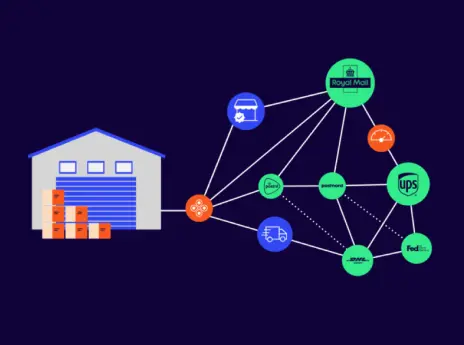
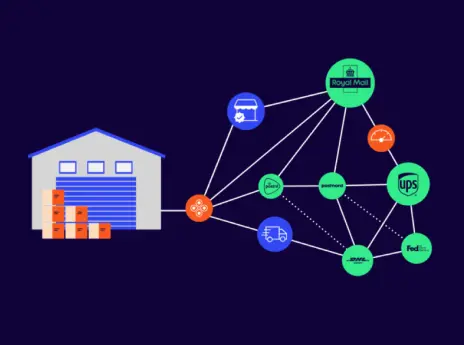
A unified carrier integration layer changes that. Tracking events are normalised. Reporting is consistent. Volume can be quickly redistributed to address performance issues.
Different carriers excel in different regions and service levels. Shipping software that integrates with many international and regional carriers enables enterprises to leverage the strengths of different carriers for different markets and optimize carrier selection by destination, service level, and cost without managing separate systems for each carrier. There’s no need to learn different processes for different carriers. The software automatically adapts to each carrier’s requirements.
The bottom line: Carrier flexibility should not increase complexity. It should reduce it.

International expansion offers clear growth potential but introduces operational strain. Customs rules vary by country. Documentation requirements differ by product type. Carrier capabilities shift across regions. What works domestically rarely translates cleanly across borders.
Shipping software built for enterprise operations turns cross-border fulfilment from a manual, high-risk process into a structured and repeatable workflow. Instead of treating international shipping as an exception, the platform manages it as part of your standard operation.
Customs documentation is often the largest obstacle. Creating commercial invoices, forms, and other required paperwork manually for thousands of shipments is slow and error-prone.
Automated customs documentation changes this entirely. The system pulls product data, such as item descriptions, HS codes, country of origin, and declared values, directly from your catalogue and account settings. It then generates the correct documentation for each shipment.
This improves accuracy, reduces duplication and reliance on manual input, and protects against incomplete or incorrect forms that delay delivery.
Advanced platforms also support electronic submission of customs data directly to carrier systems. By sending information in advance, businesses can accelerate customs clearance without printing and attaching separate paperwork. This shortens transit times and improves the reliability of delivery promises.
Compliance management is another critical area. International shipping involves changing trade rules, product restrictions, and local regulatory requirements. Enterprise shipping software centralises these controls, helping businesses apply correct documentation rules, manage duties and taxes, and adjust processes as regulations evolve.
In practice, streamlined international shipping supports faster market entry. Businesses can launch in new regions without building separate operational processes for each country. They can test demand, adjust carrier allocation, and refine their cross-border proposition without major development overhead.
The bottom line: International expansion will always involve complexity. The difference is whether that complexity is handled manually or systematically.
The blind spots outlined here share a common theme: decisions are being made, but not always intelligently.
Automation that still relies on human intervention. Fulfilment that executes without optimising. Data that exists but does not guide action. Carrier relationships that lack flexibility. International expansion that adds complexity instead of controlled growth. Together, these gaps shape margin, customer trust, and long-term scalability.
High-volume shipping is not about moving parcels faster. It is about making better decisions at scale. The retailers who perform best are those that remove friction, strengthen automation, build visibility across their network, and improve their entire delivery management system.
Exposing and closing blind spots is not glamorous. But it is strategic. And the right shipping capabilities turn them into advantages.
Schedule a demo to see how Metapack helps enterprises and high-volume shippers optimise every stage of delivery.