



























 Operational efficiency


Is your brand on board with AI?
AI use in ecommerce operations is at an all-time high, with 96% of retailers infusing this technology throughout their systems. However, progress across the industry varies. Cautious experimenters hit barriers like skills shortages, slowing progress, while “tech trailblazers” take full advantage of advanced data to improve efficiency and service.
Businesses adopt new technologies to augment operations and meet customer expectations. In the case of online shopping, the demands for faster and more reliable service continue to grow. Most retailers point their AI and digital transformation investments toward the pre-purchase experience. When polled, 54% of companies stated that they prioritised providing tailored recommendations, while 53% prioritised marketing.
Customers see the best use of AI in post-purchase and delivery. 68% said they would use AI for order and delivery tracking, while 52% want tailored recommendations. Customers don’t just want convenience, they demand it. They expect precise and transparent delivery processes and hassle-free returns.
Read on to discover the latest AI trends in automation and smart logistics.
Cutting-edge tech is reshaping ecommerce logistics. 40% of European retailers see AI and emerging tech as the way to stay ahead. That makes sense, given that “tech trailblazer” businesses with fully integrated AI across their operations experienced 3x growth in 2024.
AI is helping businesses maximise supply chains through predictive analytics and route optimisation. Predictive analytics for demand forecasting and route optimisation help anticipate demand ebbs and flows, which can help prevent over- or under-stocking. Route optimisation algorithms can also find the most logical routes so deliveries are made on time.
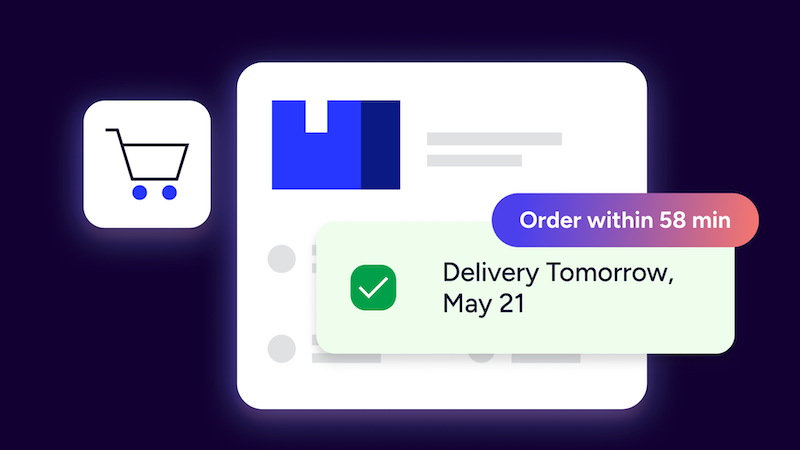
On the customer front, expectations are increasing. 57% of consumers now expect their orders to arrive within two days. Over 55% of consumers are willing to pay extra for faster delivery options, including same-day, next-day, or scheduled time slots.
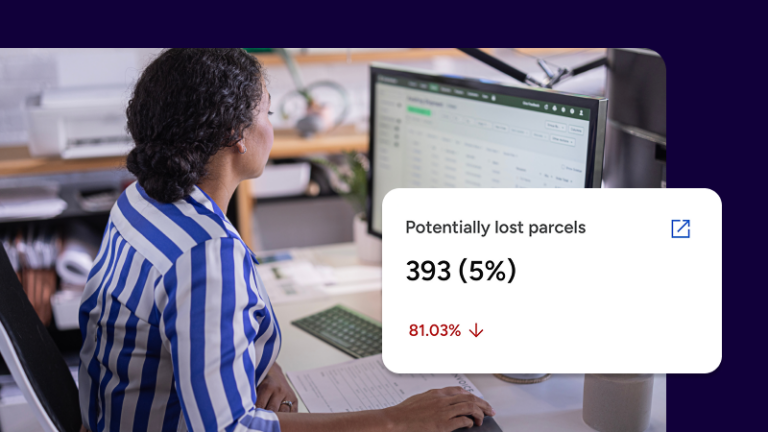
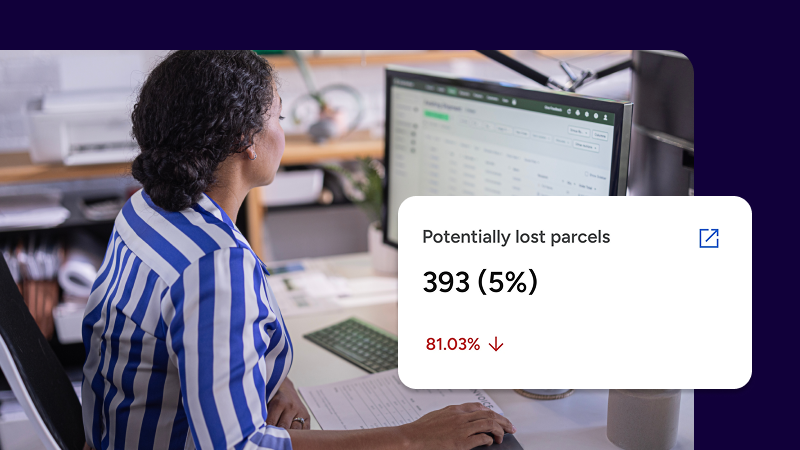
Leveraging AI-driven networks and automation to your advantage, along with offering flexible choices, can go a long way in increasing conversions and boosting revenue. AI-powered customer service, automated chatbots, and AI-driven support reduce “Where Is My Order?” (WISMO) inquiries by providing real-time tracking updates and proactive notifications. This leads to fewer service calls and a smoother post-purchase experience.
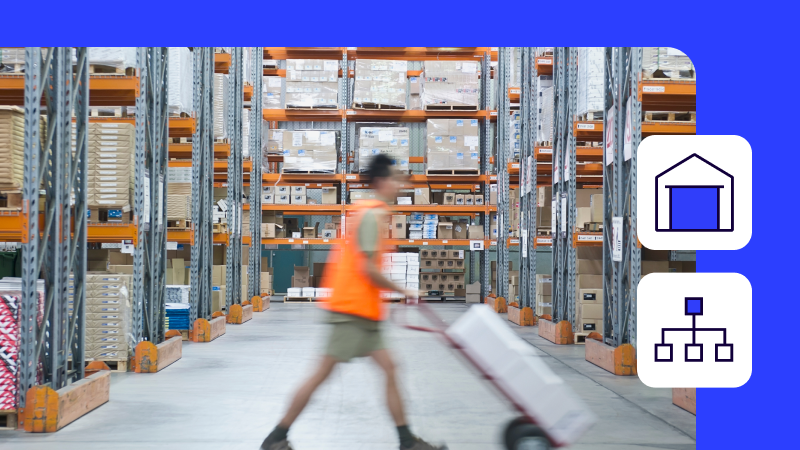
From warehouse robotics to autonomous last-mile solutions, automation slashes costs and optimises supply chains. AI-powered robotics in fulfillment centers can sort, pick, and pack orders with precision to make warehouses smarter. This reduces human error and speeds up fulfillment times, all the while producing fewer mistakes and improving customer satisfaction.
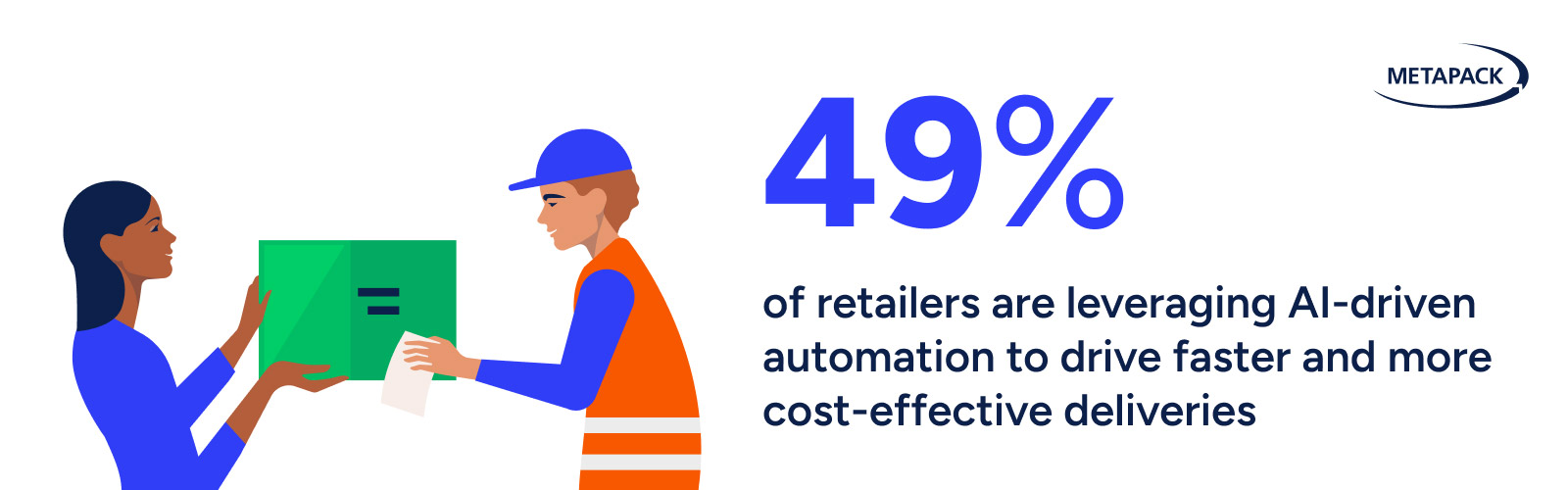
Last-mile delivery is one of the biggest challenges in ecommerce logistics, but automation is changing that. 49% of retailers are leveraging AI-driven automation to drive faster and more cost-effective deliveries. Self-driving vehicles can handle larger packages, while drones tackle smaller deliveries. AI-powered routing systems make last-mile logistics.
Scaling these technologies has challenges, such as laws around drone deliveries and safety concerns around autonomous vehicles. Add the factor of high implementation costs and this can slow progress. Businesses that invest early will create a fine-tuned logistics machine that can keep up with customer demands.
A truly efficient supply chain isn’t just automated—it’s connected. Smart logistics networks and IoT-enabled warehouses integrate real-time tracking and blockchain technology to create a seamless, data-driven ecosystem. To stay ahead, building a smarter logistics network should be a top priority.
What Defines a Smart Logistics Network?
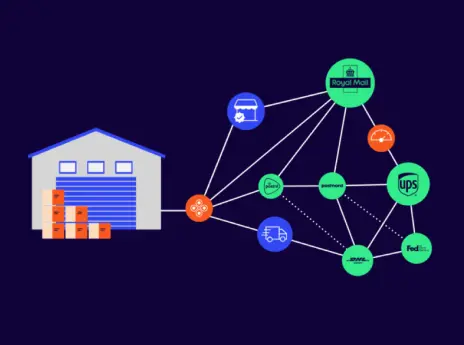
A smart logistics network runs on real-time data and predictive analytics to foresee demand, automatically selecting the best carrier based on orders. These systems seamlessly integrate with other systems, letting you monitor everything from inventory to shipments. AI-powered logistics systems can be seamlessly integrated with your current supply chain management tools, allowing you to leverage machine learning for smarter decision-making. When you have this kind of data available to you, you can optimise the whole process all while reducing costs.
How Do Blockchain, Real-Time Tracking, and IoT-Enabled Warehouses Create Transparency?
Yes, and here’s how:
Innovation doesn’t come without challenges. As businesses embrace technology, balancing automation, upskilling employees, and navigating regulatory hurdles must be prioritised for long-term success.
Ecommerce delivery will continue to adapt and evolve in the coming years, but these 4 trends are standing out:
The future of ecommerce delivery is AI-powered. Businesses that embrace these technologies now will take the lead in the quest to gain and retain customers. You can begin integrating AI into a high-impact area and work with logistics partners that offer scalable technology. Continuously assess and adapt to new evolutions in technology and consumer behaviors. By doing so, you’ll work faster and smarter to give your customers the seamless experiences they have come to expect.
Download the 2025 Metapack Ecommerce Delivery Benchmark Report to deep-dive into AI and its role in ecommerce in 2025.