




























 Customer experience


Social media platforms were designed to connect people and allow them to share content and experiences. Today, they’ve evolved to be a powerful engine for commerce. As a result of this evolution, social media has fundamentally changed how consumers discover, evaluate, and purchase products.
Effective use of social media is all but mandatory for businesses that want to stay ahead of their competitors. This is especially true for businesses targeting younger consumers. According to the 2025 Metapack Benchmark Report, 74% of Gen Z consumers plan on making purchases through social media platforms this year.
In this blog, you’ll learn about how to build a social commerce strategy, what types of content work (and what doesn’t), and the future of social commerce.
The promise of social commerce can’t be realised by treating it like a traditional shopping experience—you need to create an engaging, brand-new shopping experience. It should feel natural within the social media environment. Because each platform has a different social environment, the strategy should adapt to the platform.
For each platform, you’ll need to understand the different preferences and behaviors of your audience. Across all channels, it’s critical to craft content that resonates through authentic brand storytelling.
Traditional commerce is largely one-way, but social media allows your target audience to engage with you and other consumers in direct conversation. If the content you create isn’t engaging, you won’t benefit. To maximise engagement, all of the content you create should showcase your brand’s personality. This will create a sense of familiarity that encourages engagement. A multi-pronged approach is often the most effective:
The most successful brands are using AI to improve content targeting and delivery. The Metapack Benchmark Report shows how fashion brand Princess Polly uses AI to segment customers in great detail based on their purchase habits. By using social media targeting features, brands can create and deliver content specifically for each customer segment, offering greater personalisation, and engagement, than on-site algorithms alone can provide.
Now let’s shift to some best practices for running a social commerce campaign:
Once you have a process that works in place, you can’t go on cruise control. The social commerce landscape evolves rapidly, requiring you to adapt continuously. Make a habit of reviewing performance metrics and adjusting your strategy as trends change. One recent trend is the use of AI for tailored product recommendations, with 54% of retailers now using the tactic. Those who don’t adopt it soon may find themselves unable to compete.
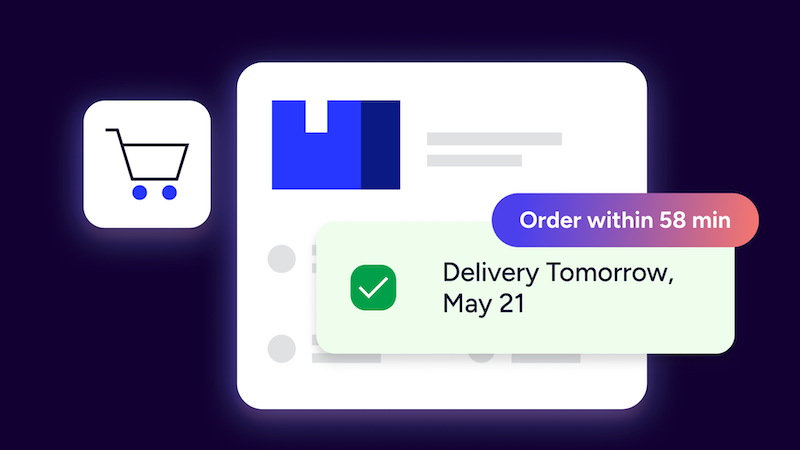
The promise of social commerce will be quickly squandered if your commitment stops after purchase. Older generations grew up waiting weeks for delivery. Today’s consumers expect much faster delivery times. According to the 2025 Metapack Benchmark Report, 57% of consumers expect their social commerce orders to arrive within two days. That percentage has continued to rise year after year.
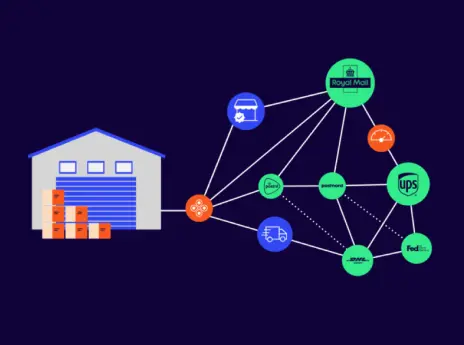
Consumers are also growing accustomed to flexible delivery options. 67% of retailers offer multiple delivery options, including home delivery, locker pick-up, and in-store pick-up, and 57% of retailers provide flexible delivery windows with specific time slots. Improved logistics and social commerce go hand in hand when creating a solid growth strategy for your business. After all, delivering convenience in shopping means nothing if the time saved is lost waiting on delayed deliveries.
Social commerce makes up 21% of all purchases globally, and this number only increases with younger generations. In fact, 74% of Gen Z and 64% of Millennials plan to shop via social platforms in 2025. As more young people become consumers, the global social commerce market will grow. In the U.S. and U.K., social commerce is expected to account for over 40% of all purchases by 2028 — double today’s rate.
Emerging trends such as more sophisticated AI recommendation engines, virtual and augmented reality shopping experiences, and increased integration of social commerce with traditional retail channels are all areas to keep an eye on.
Despite the significant opportunity social commerce presents, 46% of retailers are still missing out. This creates a competitive advantage for those who act decisively. Success in this market requires a comprehensive strategy, from platform selection to content creation, campaign management, and beyond.
To get the data your business needs to make informed decisions about taking advantage of this new evolution of commerce, download the complete 2025 Metapack Benchmark Report now.