
























Built For IndustriesIndustry-specific delivery experiences that match how your customers buy—whether it’s speed, precision, security, or seamless returns.
FashionCreate a standout customer delivery experience with flexible fulfilment, on-brand tracking, and frictionless returns that keep customers coming back.
LuxuryDeliver a premium experience end-to-end with white-glove options, tighter control, and intelligence that protects brand trust and margin.
3PLWin and retain retail clients with streamlined operations, clear SLA reporting, and scalable workflows that perform under peak pressure.
Health & BeautyDelight beauty shoppers with a polished experience—fast fulfilment, flexible checkout choices, on-brand tracking, and easy returns that build trust.
Home & DIYHandle bulky, fragile, and multi-part shipments with smarter rules, scheduled options, store-as-hub fulfilment, and proactive updates that keep projects on track.
Sports & LeisureDeliver gear on time with flexible options, smart routing for oversized orders, and real-time visibility. Branded tracking cuts WISMO, protects valuables.
AI Powered CapabilitiesOne Intelligent Layer for Every Delivery Decision
Unify data, insight, and automation across checkout, fulfilment, and post-purchase—so delivery decisions are smarter, faster, and always improving.
Built For TeamsRole-based capabilities for every team in the delivery chain—from IT and Procurement to Customer Service and Finance—with shared data and control.
Ecommerce & DigitalTurn delivery into a growth engine with flexible checkout options, branded tracking, and data-driven carrier control—boosting conversions, retention, and global expansion.
Logistics & TransportHigh-performance logistics platform that automates fulfilment, unifies carriers, cuts shipping and customs costs, boosts visibility, and reduces risk end-to-end.
ProcurementStrengthen procurement with rapid carrier onboarding, real SLA intelligence, and diversified sourcing—cut costs, reduce risk, and negotiate better with trusted data.
Customer ServiceProactive, data-rich delivery support that reduces “where is my order” inquiries, predicts issues early, speeds resolution, and keeps customers loyal post-purchase.
IT & EngineeringAPI-first delivery infrastructure with modular components, enterprise security, sub-300ms performance, and fast carrier onboarding to scale without technical debt.
FinanceUnified, parcel-level shipping cost visibility and controls that improve forecasting, allocate spend accurately, prevent overspend, and protect margins.
AI Powered CapabilitiesOne Intelligent Layer for Every Delivery Decision
Unify data, insight, and automation across checkout, fulfilment, and post-purchase—so delivery decisions are smarter, faster, and always improving.
Checkout & ShippingIndustry-specific delivery experiences that match how your customers buy—whether it’s speed, precision, security, or seamless returns.
Delivery OptionsShow real-time, validated delivery choices at checkout—fast to deploy—boosting conversion, confidence, and repeat purchases with flexible pickup and fulfillment options.
Delivery ManagerUnify global carriers, automate fulfilment, cut shipping costs, scale fast, and deliver flexible checkout options with a high-performance API.
AI Powered CapabilitiesOne Intelligent Layer for Every Delivery Decision
Unify data, insight, and automation across checkout, fulfilment, and post-purchase—so delivery decisions are smarter, faster, and always improving.
BLOG3 Reasons Carrier Flexibility is the New Competitive Edge
If the past few years have taught us anything, it’s that shipping challenges are inevitable and often feel endless. From peak season volume surges and carrier capacity crunches to geopolitical issues and rate volatility, shipping failures and disruptions are, unfortunately, consistent features of the delivery process.
With a broad portfolio of personal care, beauty, and wellness products, the Nu Skin website showcases a wide range of science-backed solutions available to customers worldwide.
Why Business Automation Isn’t Optional in 2026Automation is the 2026 competitive edge—eliminate manual time-drains with faster fulfilment, fewer errors, and smarter delivery operations at scale.
BLOGWhy Business Automation Isn’t Optional in 2026
The companies that will thrive in 2026 have one thing in common: they're automating the time-drains holding others back. Business automation uses technology to handle repetitive tasks automatically—without human intervention—so your team can focus on higher-value work.
Resource HubLearn more about Metapack, watch webinars on demand, download whitepapers, access the Developer Centre, and more.
EventsView upcoming and past Metapack events—from TDC to curated industry meetups and sessions.
GuidesExplore strategic guides from benchmark reports and whitepapers to ebooks.
Help CentreGet product help, documentation, and release notes across Metapack solutions.
Developer CentreExplore API docs, integration guides, and developer tools for Metapack delivery services.
REPORTMetapack Ecommerce Benchmark Report 2026
Ecommerce has reached a decisive turning point. For years, the industry focused on optimizing for human behaviour—better websites, faster checkout flows, smarter pricing, and more flexible delivery options. In 2026, ecommerce is entering a new phase where retailers are no longer competing only for human attention.
How a Luxury Fashion House Scaled Global Delivery Without Increasing Complexity
“Our solution must enable us to meet customer delivery expectations with the highest level of precision, while giving us the tools to implement new requirements quickly and effectively.”
By Candace Barnette
Last Updated Jun 02, 2026 – 5 min read
7 years
of partnership spanning fashion, beauty, B2B, and new market launches for 55 countries
55
countries now reached across DTC and B2B channels
+80%
peak volume growth year-on-year at its highest point
20%
volume growth in 2025, following consistent expansion
49
carrier propositions, including Generic Carrier Module
Delivering for a global luxury brand is not like delivering for anyone else. The parcel is not just a box. It is a continuation of an experience that began the moment a customer walked into a boutique or browsed a flagship website. Every operational decision, from carrier selection to tracking communications, either reinforces or erodes that brand promise.
For this global luxury fashion house, operating across Europe, North America, and Asia, the challenge was not building something from scratch. A delivery operation was already in place. The challenge was ensuring that as the business scaled, adding new product lines, new warehouses, new markets, and new channels, the infrastructure could keep up without demanding disproportionate operational effort. That is where Metapack came in.
The challenge: Scale without complexity
The partnership with Metapack dates back to 2018 and has developed across several distinct phases, each one adding capability without disrupting what was already working. The business was shipping across multiple continents, managing both direct-to-consumer and B2B channels, supporting everything from flagship fashion lines to a beauty range, and operating warehouses across Europe, the US, Japan, and Singapore.
The internal team’s time was being consumed by manual processes that had no reason to be manual. Exporting batches of shipment data, updating shipment definitions, managing carrier relationships, all of it was creating drag the logistics team could not afford. Every new market or carrier meant a significant integration project. The platform had to change.
Building the operational backbone
Early priorities were operational efficiency: reducing the manual overhead absorbing time the logistics team could not afford to lose. Metapack introduced batch export and bulk editing tools that fundamentally changed how the team worked, collapsing multi-hour manual processes into minutes and freeing up resources for decisions that actually moved the business forward.
Security and access management followed. Single Sign-On was implemented to reduce the friction and risk associated with managing user credentials across a large, geographically distributed team. Mobile barcode scanning was deployed to address label waste and reduce exposure to fraud in fulfilment environments.
“We needed to reduce manual processes, but the goal was never just speed. Quality and consistency matter just as much to us. What changed was that the team stopped spending hours on repetitive tasks and started spending that time on decisions that actually improve the operation.”
HEAD OF LOGISTICS OPERATIONS
New product lines. New markets. No disruption.
Where the partnership demonstrated its real value was in growth moments. When the brand launched a new beauty range last year, the fulfilment flow stood up using the existing API configuration already in place, no dedicated integration project required. B2B channels followed the same pattern, activated across multiple new markets without the usual implementation timelines.
When shifting trade dynamics prompted a strategic decision to open a new regional warehouse, that too came online without a major infrastructure project. The ability to respond quickly to external commercial pressure, and do it cleanly, is exactly what enterprise-grade delivery infrastructure should enable.
How the generic carrier module changes the carrier equation
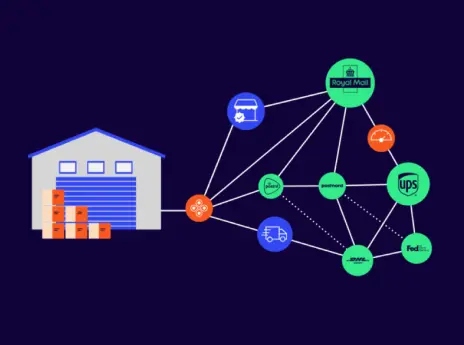
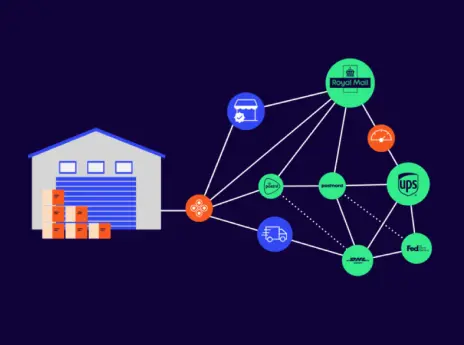
A key part of that flexibility is the Generic Carrier Module. Rather than requiring a direct Metapack integration for every carrier, it allows niche and specialist carriers to be onboarded quickly using a single integration framework. The account now runs 49 carrier propositions, many of them onboarded this way.
One of the more distinctive services we helped enable is LivingPackets, a smart reusable packaging solution that replaces a standard carton with a connected, tracked box. For a luxury brand the appeal goes well beyond cost savings. LivingPackets provides forensic-grade shipment data, tamper detection, and real-time location visibility, things that matter considerably more when what is inside the box is fine leather goods or jewellery than when it is a pair of socks. Metapack’s platform supported a seamless rollout using the digital label format.
Volume growth that speaks for itself
The headline numbers reflect what happens when a business builds genuine confidence in its delivery platform. Volume through the platform grew 80% in 2021, 55% in 2022, and returned to 20% growth in 2025 after a period of consolidation. That trajectory is not coincidental. It reflects a team that trusted the infrastructure enough to expand into new channels and territories with confidence.
Over the course of the partnership the brand has extended its delivery footprint to 55 countries, each one activated without rebuilding the underlying infrastructure. That kind of reach is only possible when the carrier network behind it is genuinely flexible.
“When we are evaluating a new market, a new warehouse, or a new carrier partner, integration complexity cannot be a deciding factor. It should never slow us down or box us in. With the infrastructure we have in place, it doesn’t.”
DIRECTOR, SUPPLY CHAIN
What comes next
The next phase is shaped by three priorities the business has set for itself. First, driving conversion through more precise estimated delivery dates, giving customers confidence at the point of purchase. Second, anticipating disruptions before they reach the customer. Third, building tighter visibility into carrier performance to underpin both. With infrastructure already delivering 30% faster speed to market, the foundation is there.
For a business whose reputation depends on precision at every touchpoint, delivery should be an expression of the brand, not a constraint on it.